The Multi-site All Sky CAmeRA (MASCARA)
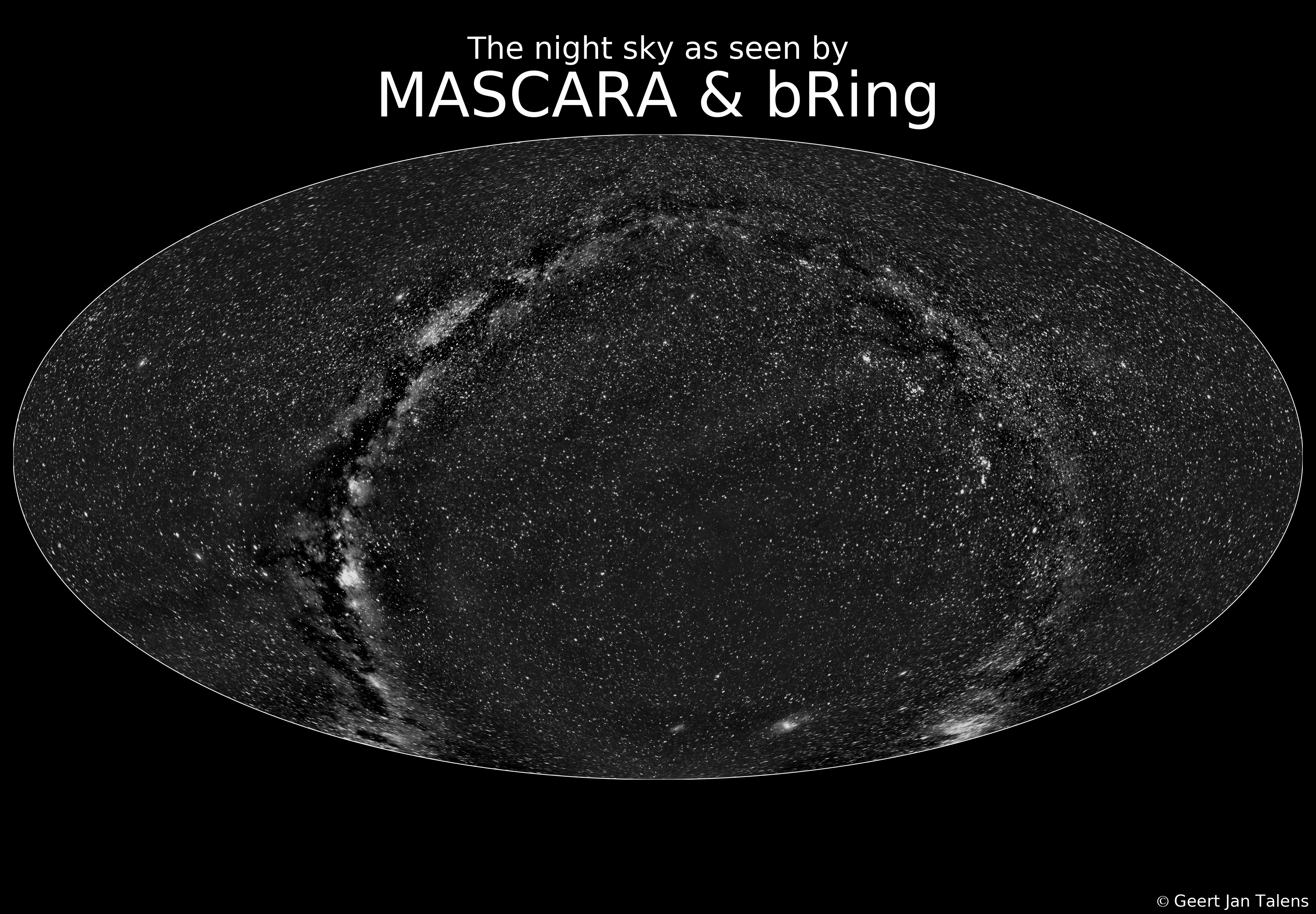
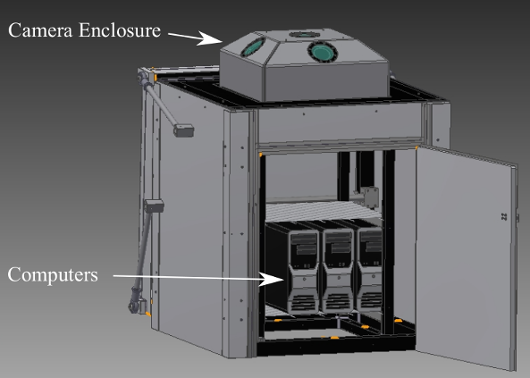
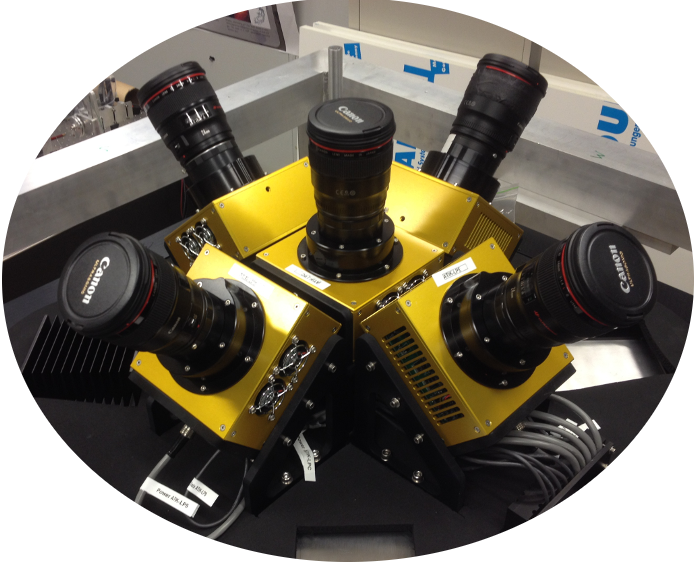
MASCARA was designed to be a low-cost network of stations to observe the brightest stars for exoplanets, which had never been probed before. MASCARA consists of two main stations, one in the northern hemisphere at Roque de los Muchachos Observatory, in La Palma, and the other in the southern hemisphere at the European Southern Observatory’s La Silla Observatory in northern Chile. Each MASCARA station has five off-the-shelf cameras, which observe nearly the entire sky down to a limiting magnitude of 8.3 at 6.4 second cadence.
The main purpose of MASCARA is to find the brightest transiting exoplanetary systems (V = 4-8 magnitudes), and has secondary science objectives of observing variable stars and characterizing Delta Scuti pulsations, among others. MASCARA has already found two planets, and is expected to find more before TESS has completed observations.
The northern MASCARA station has been operational since early 2015, and the southern station has been operational since late 2017. The MASCARA network is paired with the two bRing stations, which were designed as mini-MASCARAs, located in Siding Springs Observatory in Australia and in the South African Astronomical Observatory in South Africa.